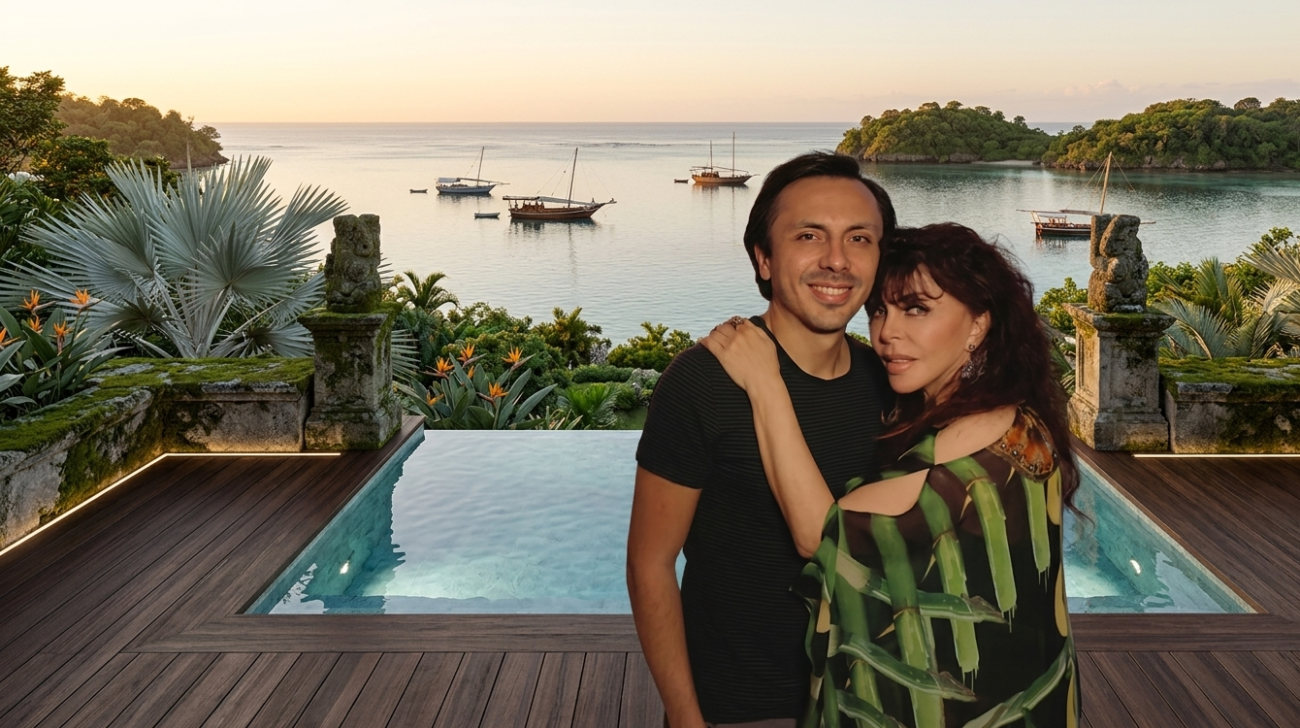
Michel Sáenz Castro was born into a world where creativity, performance, and public attention were already deeply woven into the fabric of daily life. From the very beginning, his surroundings were shaped by the entertainment industry, not as an abstract concept but as a lived reality that influenced conversations, ambitions, and even the rhythm of ordinary family moments. Growing up in Mexico, he was exposed early to the intensity of artistic life, where storytelling was not just a profession but a way of understanding the world. His upbringing carried the unique contrast of being close to fame while still developing a desire for privacy and independence, a balance that would later define much of his personal and professional journey.
His family environment played a major role in shaping his artistic awareness. Being connected to widely recognized figures in Latin American entertainment meant that he witnessed both the brilliance and the pressure that come with public life. Instead of being overwhelmed by it, he gradually formed a reflective personality, often observing more than participating. This early tendency to watch, analyze, and understand visual expression would later become a foundation for his career behind the camera. Even as a child, he was drawn not to the spotlight itself, but to the mechanics of how stories were built, how scenes were created, and how emotions could be translated visually.
While many assume that growing up in such a well-known family automatically leads to a pursuit of fame, his path was shaped differently. The presence of artistic influence around him did not push him toward performance, but instead toward creation. He began to appreciate the invisible craftsmanship behind film and television, developing a quiet fascination with how directors and cinematographers shaped emotion through framing, lighting, and movement. This early curiosity would become the seed of a lifelong dedication to visual storytelling.
Michel Sáenz Castro Education and Formative Years
As Michel Sáenz Castro entered his academic years, his interests gradually became more focused and intentional. Education played a crucial role in transforming his natural curiosity into structured knowledge. He pursued studies related to communication and media, where he began to understand not only the artistic side of visual production but also its technical and narrative dimensions. This stage of his life marked a transition from passive observation to active learning, as he immersed himself in the principles that guide film and television production.
During this period, he developed a deeper appreciation for how stories are constructed. He studied the relationship between image and emotion, learning how camera angles can influence perception and how editing can reshape time and meaning. These insights expanded his understanding of storytelling beyond instinct, giving him the tools to eventually craft his own visual narratives. His education also exposed him to international perspectives, allowing him to compare different cinematic traditions and recognize the universal language of film.
A significant turning point in his formative years came when he decided to refine his skills further by studying filmmaking in a more specialized environment. This experience allowed him to work closely with practical production techniques, where theory met hands-on application. It was here that he fully realized his preference for working behind the scenes, where creative decisions shape the final emotional impact of a project without the need for public attention. This period also strengthened his discipline, as he learned that filmmaking demands patience, precision, and collaboration.
By the end of his educational journey, Michel Sáenz Castro had built a strong foundation not only in technical knowledge but also in artistic philosophy. He understood that film is not simply about capturing images but about constructing experiences that resonate with audiences on a deeper emotional level. This realization became a guiding principle that would influence every step of his career.
Michel Sáenz Castro Entry into Filmmaking
The beginning of Michel Sáenz Castro’s professional path was marked by a deliberate choice to step away from expectations and define his own direction. Instead of pursuing roles that would place him in front of the camera, he gravitated toward production and cinematography, where creativity is expressed through structure, composition, and visual rhythm. This decision set him apart from the more visible aspects of the entertainment world surrounding him and highlighted his preference for meaningful contribution over public recognition.
His early work in filmmaking involved participation in smaller projects where experimentation was encouraged and learning was constant. These initial experiences allowed him to understand the realities of production environments, where ideas must adapt to practical constraints such as time, lighting conditions, and collaborative dynamics. Through these challenges, he developed resilience and adaptability, qualities that are essential for any successful filmmaker. Rather than viewing limitations as obstacles, he began to see them as opportunities to innovate.
As he continued to grow in the field, Michel Sáenz Castro refined his ability to translate emotion into visual form. He became increasingly interested in how subtle elements such as natural lighting, composition balance, and camera movement could influence storytelling. His approach was not focused on spectacle but on authenticity, aiming to create visuals that feel organic and emotionally grounded. This philosophy distinguished his early work and helped him build a reputation as a thoughtful and detail-oriented creator.
His entry into filmmaking was not defined by a single breakthrough moment but rather by a gradual accumulation of experience and insight. Each project contributed to his understanding of the craft, reinforcing his belief that strong visual storytelling requires both technical skill and emotional intelligence. Over time, he established himself as a reliable presence in production environments, valued for his calm approach and creative sensitivity.
Michel Sáenz Castro Career Development in Film Production
As his career progressed, Michel Sáenz Castro became more deeply involved in the world of film production, taking on roles that allowed him to shape the visual identity of various projects. His work expanded beyond basic cinematography into broader creative responsibilities, where he contributed to the planning and execution of visual narratives. This stage of his career reflected a growing confidence in his artistic voice, as well as a clearer understanding of his long-term professional identity.
Working in production environments exposed him to diverse creative teams and storytelling styles. Each collaboration added new dimensions to his skill set, helping him refine his ability to adapt to different artistic visions while maintaining his own creative consistency. He became known for his ability to interpret scripts visually, transforming written ideas into structured visual sequences that communicate mood and meaning effectively. His contributions often emphasized emotional clarity, ensuring that each frame served a purpose within the larger narrative.
Over time, he also became associated with more refined and concept-driven projects, including short films and visual productions that required a strong artistic direction. In these environments, his role often extended beyond technical execution, involving conceptual input and aesthetic decision-making. This evolution marked his transition from a technical contributor to a creative collaborator, someone whose perspective influenced the overall direction of a project.
Despite the growth of his career, Michel Sáenz Castro maintained a consistent approach rooted in humility and focus. He did not seek visibility or public acclaim but instead prioritized the quality of his work. His professional development was characterized by steady progress rather than sudden recognition, reflecting a career built on persistence and dedication rather than external validation. This grounded approach allowed him to remain closely connected to the essence of filmmaking, which for him has always been about storytelling rather than fame.
Michel Sáenz Castro Creative Style and Professional Vision
The creative style of Michel Sáenz Castro is defined by a strong emphasis on emotional authenticity and visual simplicity. Rather than relying on overly complex techniques or dramatic visual effects, he prefers to focus on natural expression and subtle storytelling elements. His work often reflects a sensitivity to light, space, and movement, creating images that feel both intimate and cinematic. This approach allows audiences to engage with the emotional core of a story without distraction.
His professional vision is rooted in the belief that film should serve as a bridge between emotion and experience. He views cinematography not just as a technical craft but as a language capable of expressing thoughts and feelings that cannot always be articulated through words. This philosophy influences the way he approaches each project, guiding his decisions from pre-production planning to final visual execution.
Another defining aspect of his style is his attention to detail. Every frame he works on is treated as part of a larger emotional composition, where even the smallest visual element contributes to the overall narrative impact. This meticulous approach reflects his dedication to storytelling integrity, ensuring that the final product maintains coherence and emotional depth.
His vision also includes a strong appreciation for collaboration. He understands that filmmaking is a collective effort, requiring the integration of multiple creative perspectives. As a result, he values communication and teamwork, often working closely with directors, designers, and production crews to achieve a unified artistic outcome. This collaborative mindset has become one of his most respected professional qualities.
Michel Sáenz Castro Notable Works and Achievements
Throughout his career, Michel Sáenz Castro has contributed to a variety of film and visual production projects that highlight his versatility and artistic consistency. While he does not focus on personal recognition, his work has been appreciated within professional circles for its visual clarity and emotional depth. His contributions often involve shaping the visual tone of a project, ensuring that the imagery aligns seamlessly with the intended narrative.
He has worked across different formats, including short films, commercial productions, and experimental visual pieces. Each project has allowed him to explore new creative challenges and expand his understanding of visual storytelling. His ability to adapt to different production environments has made him a valuable collaborator in projects that require both technical precision and artistic sensitivity.
One of the most notable aspects of his achievements is not tied to fame or awards but to consistency. He has built a career defined by steady contribution, where each project reflects a continued commitment to quality and artistic growth. His work is often characterized by a refined aesthetic that prioritizes emotional resonance over visual excess, making his contributions distinctive in a competitive industry.
Over time, his professional journey has demonstrated that success in filmmaking is not always measured by public recognition but by the ability to consistently create meaningful visual experiences. His achievements lie in the trust he has earned within creative teams and the respect he has gained as a thoughtful and reliable cinematographer.
Conclusion
The story of Michel Sáenz Castro is one of quiet dedication, artistic discipline, and personal clarity. In a world often driven by visibility and public attention, he chose a different path, one that values creation over recognition and depth over exposure. His journey through filmmaking reflects a steady commitment to understanding and shaping visual storytelling in its most authentic form.
From his early exposure to creative environments to his professional development behind the camera, he has consistently demonstrated a thoughtful approach to his craft. His career is not defined by dramatic shifts or public milestones but by continuous growth and a strong sense of purpose. Each stage of his journey contributes to a broader narrative of an individual who found meaning in the art of visual storytelling.
Michel Sáenz Castro stands as an example of how artistic identity can be built through patience, observation, and dedication. His work continues to reflect a belief in the emotional power of cinema and the importance of crafting stories that resonate beyond the screen. In doing so, he has established a professional legacy rooted not in fame, but in the quiet strength of creative integrity and lasting artistic contribution.
